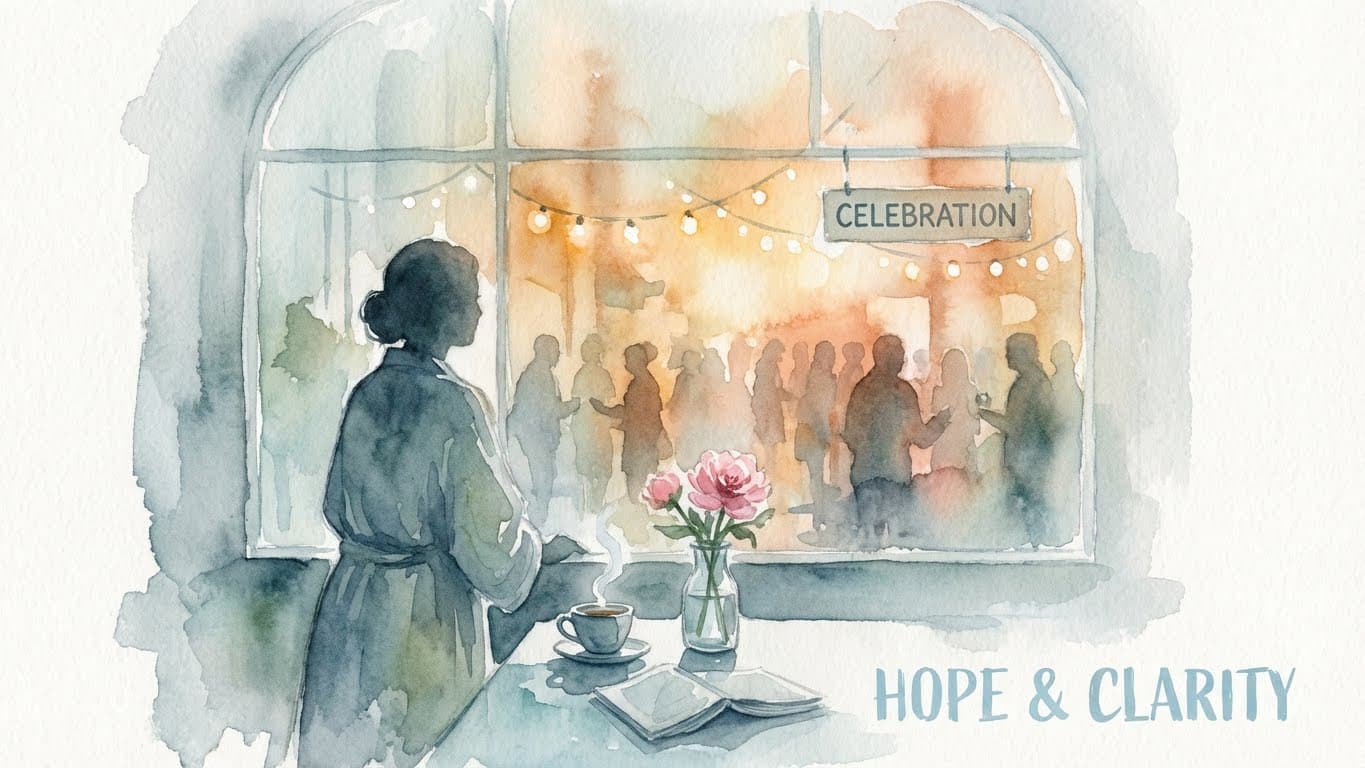
The holiday season is often painted as a time of endless joy and connection. But for those of us who identify as introverts or Highly Sensitive People (HSPs), this time of year can feel less like a celebration and more like a relentless assault on the senses.
You are not broken for feeling this way. You are not being a 'grinch.' You are simply experiencing a biological reality that we often overlook: the social battery is real, and running it dry comes with a physiological cost.
The Neuroscience of the 'Social Battery'
We often use the term 'social battery' as a metaphor, but within your nervous system, it is a tangible resource allocation issue. Socializing, especially in large groups or loud environments, requires high levels of cognitive processing and emotional regulation.
For an HSP, this demand is amplified. Your brain processes sensory data—sights, sounds, the emotional temperature of the room—more deeply than the average person. This consumes dopamine, the neurotransmitter responsible for reward and motivation. When your dopamine stores are depleted faster than they can be replenished, your brain sends a distress signal.
The Protective Shutdown (Dorsal Vagal)
What happens when we ignore this signal? We don't just get 'tired.' We enter a state known as Dorsal Vagal Shutdown.
This is a primal defense mechanism of the vagus nerve. When the system detects that the 'cost' of the environment outweighs the resources available, it pulls the emergency brake. You might feel suddenly numb, foggy, or unable to form words. You might find yourself retreating to a corner and unable to engage. This is your body trying to protect you from complete system failure by immobilizing you.
Energy Conservation Protocols
Surviving the festivities isn't about avoiding them entirely; it is about strategic engagement. We call these 'Energy Conservation Protocols.'
1. The Bathroom Sanctuary Protocol
The bathroom is not just for hygiene; it is a sensory deprivation chamber. When you feel your heart rate rising or your focus scattering, take a 5-minute sanctuary break. Lock the door. Run cold water over your wrists. Close your eyes. This brief pause signals to your nervous system that you are safe, allowing your cortisol levels to drop momentarily before you re-enter the fray.
2. The Biology of the 2-Hour Limit
Research suggests that our optimal window for sustained social interaction without a recharge is often shorter than we think. Set a hard limit of 2 hours for high-stimulation events. It is easier to leave while people are still having fun than to wait until you are exhausted and irritable. Leaving early is an act of self-respect, not rudeness.
3. The Graceful Exit Strategy
Anxiety often spikes when we worry about how to leave. Prepare your script in advance. 'I've had such a lovely time, but I have an early start tomorrow, so I need to head out.' You do not owe anyone a detailed explanation of your energy levels.
Finding Your Spark Again
If you do find yourself slipping into that numb, frozen state, remember: gentle mobilization is key. You don't need to force yourself to be 'on.' You need a soft nudge to remind your system that it is safe to feel.
We created The Inner Spark Audio specifically for this moment. Using 528Hz frequency and gentle acoustic humming, it is designed to gently stimulate the vagus nerve without overwhelming you. It is not a high-energy hype track; it is a quiet invitation to come back to your body.
This season, give yourself the permission to prioritize your peace. Your capacity is limited, and that is okay. Protecting it is the greatest gift you can give yourself.