The Silence That Speaks
It is 3 AM. The house is quiet. Perhaps you are scrolling through your phone, not because you are interested, but because the silence feels too heavy. This is a moment many of us know intimately. In clinical terms, when we are alone and our nervous system perceives a lack of connection, the amygdala—the brain's smoke detector—can trigger a stress response. This often manifests as a racing heart, shallow breathing, or a vague sense of dread. We call this loneliness. Biologically, your brain is signaling a survival threat: "Where is my tribe?"
But there is a profound difference between loneliness (a state of deficiency) and solitude (a state of rest). As we approach Valentine's Day, a day often focused on external validation, we want to invite you to try a different kind of date. Not one based on distraction, but on connection. We call it The Somatic Date.
The Neuroscience of Solitude
To shift from loneliness to solitude, we must communicate safety to the Vagus Nerve. When we are in a state of anxious loneliness, our Sympathetic Nervous System is often ramped up, pumping cortisol through our veins as we scan for danger or connection.
Solitude, however, is regulated by the Ventral Vagal complex—the part of our nervous system responsible for social engagement and safety. The goal of a Somatic Date is not to force yourself to "enjoy being alone," but to show your body that it is safe to be in your own presence. This is the foundation of a "Secure Base." Just as a child feels safe to explore when they know a caregiver is nearby, you can become that secure figure for yourself.
Interoception: The Art of Internal Sensing
The key to this practice is Interoception—the sense of how our body feels internally. When we are anxious, we often dissociate or live in our heads. We worry about the future or ruminate on the past. A Somatic Date brings you back into the physical reality of the present moment using texture, taste, and slow movement.
Step 1: Setting the Scene (Sensory Anchor)
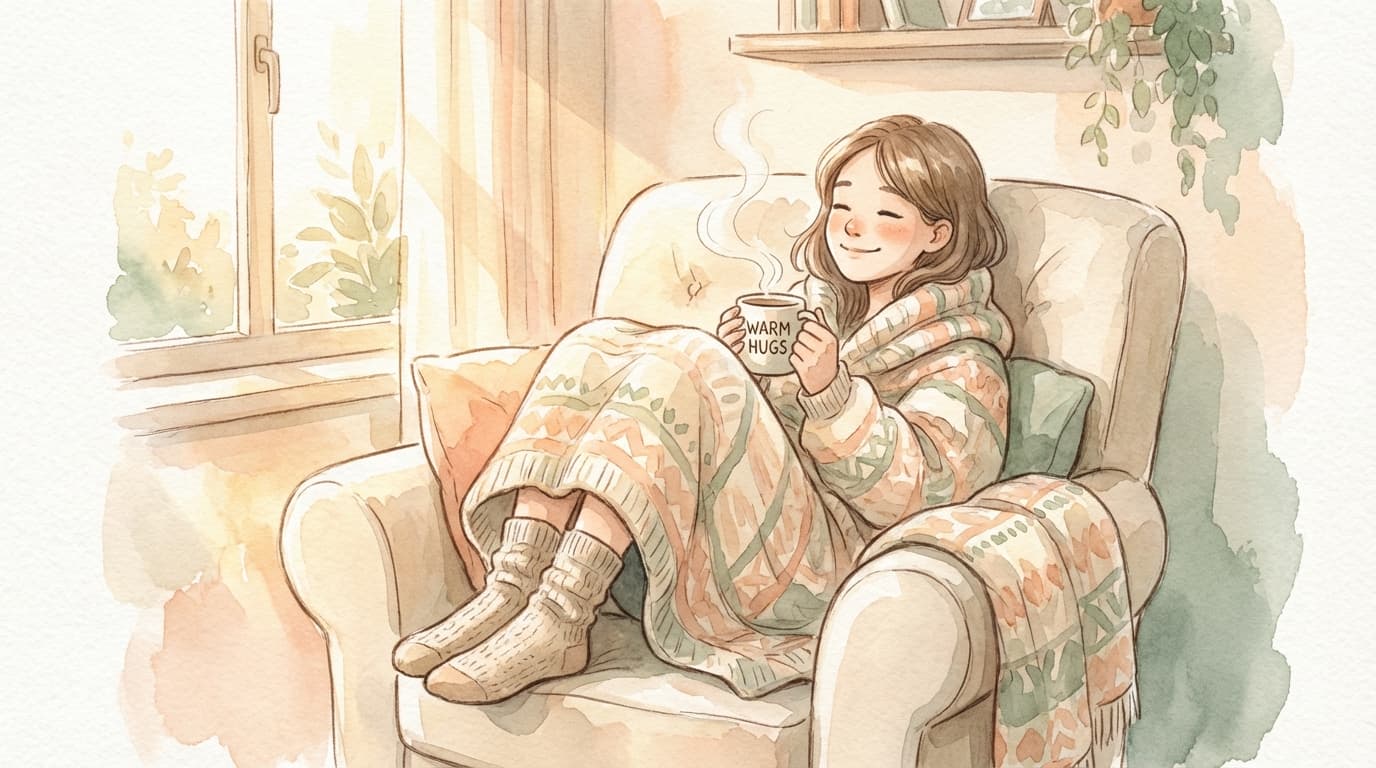
Create an environment that signals "rest" to your brain. This does not require expensive setups. It is about intention. Light a candle with a scent that grounds you—perhaps vanilla or lavender. Wrap yourself in a blanket with a texture that feels comforting against your skin. This tactile input stimulates the nerve endings in your skin, sending gentle signals up the spine to the brain that say, "You are held."
Step 2: The 5-Minute Beverage Ritual
Prepare a warm drink—tea, cacao, or warm water with lemon. Engage fully in the process. Watch the steam rise. Feel the warmth of the cup in your hands. As you drink, do it slowly. Conscious drinking activates the parasympathetic nervous system (the rest and digest state) and mechanically slows down your breathing, which directly lowers cortisol levels.
Step 3: Gentle Movement or Stillness
Anxiety often creates a buzzing sensation under the skin—a need to move. Instead of fighting it, use gentle rocking or swaying. This rhythmic movement mimics the soothing motion of being held as an infant. It is a primal somatic tool for regulation. If you prefer stillness, try a body scan. Where are you holding tension? Without judgment, just notice. "I feel tightness in my jaw." "I feel a heaviness in my chest."
Moving from Distraction to Presence
Often, when we are alone, we use distraction—Netflix, social media, work—to avoid the internal void. A Somatic Date asks you to step into that void. It sounds counterintuitive, especially for the anxious mind. But by acknowledging your internal state without trying to fix it immediately, you build resilience.
You are teaching your nervous system that it can handle discomfort. You are building trust with yourself.
Closing the Date
End your date with a moment of gratitude—not for achieving something, but for showing up. Place a hand on your heart and acknowledge your own presence. "I am here. I am safe."
This Valentine's Day, if the silence feels loud, know that you have the capacity to turn the volume down. You do not need another person to complete you; you need to reconnect with the part of you that already knows how to find peace.
If the racing thoughts make this practice difficult, listen to our free Calm Loop Audio. It is designed to support your nervous system as you learn to find safety in your own company.